A new federal investigation into the 2024 Bio-Lab fire in Georgia found that corrosion, chemical storage practices, and known equipment problems combined to create a major industrial emergency. The findings offer a broader lesson for facilities of all kinds: small maintenance issues do not always stay small.
Most industrial emergencies do not begin with something that looks catastrophic.
A corroded pipe. A leaking valve. A damaged sprinkler head. A storage area that has gradually become more crowded than originally intended.
Each problem may seem manageable on its own.
But when several of those conditions exist at the same time, they can interact in ways that are much harder to predict.
That is one of the clearest lessons from the U.S. Chemical Safety and Hazard Investigation Board’s recently released final investigation into the September 2024 fire at the Bio-Lab facility in Conyers, Georgia.
The incident eventually destroyed a warehouse, led to the evacuation of approximately 17,000 nearby residents, and resulted in shelter-in-place orders affecting roughly 90,000 people in the Atlanta metropolitan area.
The cause, according to investigators, was not a single dramatic equipment failure.
It was a chain of conditions that had developed over time.
What Happened at Bio-Lab?
Bio-Lab manufactures pool and spa treatment chemicals, including chlorinated products that can react strongly with water.
On September 29, 2024, water leaked from a corroded component in the facility’s sprinkler system and came into contact with highly reactive chemicals stored inside the warehouse.
That contact triggered chemical decomposition, generated intense heat, and eventually contributed to multiple fires and a large plume containing chlorine, hydrogen chloride, bromine, and other substances.
The Chemical Safety Board’s investigation page now includes the full final report and related recommendations.
What makes the incident particularly important from a maintenance perspective is that corrosion in the sprinkler system was not entirely unexpected.
Investigators found that components of the fire-protection system had experienced significant corrosion and leaking since shortly after the warehouse began storing the chemicals in 2019.
During an annual sprinkler inspection in December 2023, approximately nine months before the incident, more than 1,100 sprinkler heads were visually observed to be corroded.
That detail changes the way the incident should be viewed.
This was not simply an unpredictable accident caused by equipment suddenly failing.
There were warning signs.
How Could Chemicals Corrode a Sprinkler System?
This is where the incident becomes particularly interesting.
The chemicals did not need to spill directly onto the sprinkler system to cause a problem. According to the CSB, large containers of chlorinated chemicals stored inside the warehouse naturally released small amounts of chlorine-containing vapor. Those fumes mixed with moisture in the air and could form hydrochloric acid droplets on metal surfaces. Over time, that environment contributed to corrosion of sprinkler-system components.
In other words, the chemicals were slowly affecting the infrastructure around them simply by being stored there. That is an important reminder for any industrial facility. Equipment may technically be compatible with the material it directly handles while still being vulnerable to the surrounding environment.
Humidity, vapor, mist, dust, temperature, chemical fumes, washdown water, and nearby processes can all affect equipment that was never intended to come into direct contact with the product.
The Facility Was Also Storing Much More Material Than Originally Expected
Maintenance was only part of the issue.
When the warehouse was planned in 2019, documentation submitted to local authorities anticipated an average inventory of approximately 6.2 million pounds of raw materials, including oxidizers.
By the time of the fire in 2024, the warehouse contained nearly 14 million pounds of chlorinated isocyanurates and other reactive chemicals.
That was more than twice the amount originally identified.
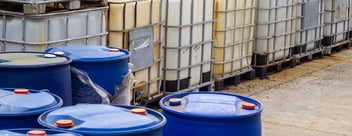
Approximately 5,000 large bulk bags, or “super sacks,” were stored inside the building. Individual sacks contained roughly 2,200 to 2,800 pounds of material.
The CSB also found that the bags were not waterproof and that the warehouse was not air-conditioned. Its ventilation system was not sufficient to effectively control humidity given the amount of oxidizer material being stored.
None of these conditions existed in isolation.
-
More chemicals meant more material capable of releasing corrosive fumes.
-
Humidity helped those fumes affect metal surfaces.
-
Corrosion weakened sprinkler components.
And when a sprinkler component eventually failed, water was introduced into a warehouse filled with chemicals that could react dangerously with it.
Several manageable issues had become one much larger problem.
The Risk of “Run to Failure”
The Chemical Safety Board identified five major safety issues that contributed to the severity of the incident.
The first was described simply as “run to failure.”
The phrase describes an approach where equipment continues operating until it actually breaks rather than being repaired or replaced based on its condition or the risk associated with failure.
There are situations where this can make sense.
A burned-out light bulb is usually replaced after it fails. Some inexpensive equipment may be cheaper to replace than to maintain proactively.
But that logic changes when the equipment is part of a safety system or when its failure can release chemicals, interrupt production, create wastewater, or affect the surrounding community.
A leaking valve in an isolated utility system is not the same as a leaking valve controlling a corrosive process chemical.
A corroded sprinkler head in an office building is not necessarily the same risk as a corroded sprinkler head directly above thousands of pounds of water-reactive material.
Maintenance priorities need to account for what happens after something fails.
Maintenance Is Really Risk Management
Industrial maintenance programs naturally focus on reliability.
-
Will the pump continue running?
-
Is the tank structurally sound?
-
Does the valve close correctly?
-
Is the pipe beginning to leak?
Those questions are important, but they are only part of the picture.
Facilities should also consider the consequences if a component fails.
A relatively inexpensive piece of equipment can sit between normal operations and a very expensive response.
Depending on the facility, failure could result in:
- A production shutdown
- Loss of raw material
- A chemical spill
- Contaminated stormwater
- Firewater requiring collection and management
- Damage to secondary containment
- Wastewater that can no longer be discharged normally
- Emergency transportation or disposal needs
- Regulatory reporting
- Community impacts
- Extended cleanup operations
The maintenance cost of replacing a corroded component can be small compared with the cost of managing everything that follows its failure.
Storage Conditions Can Change Over Time
Another lesson from the Bio-Lab investigation is that industrial facilities rarely remain exactly as they were originally designed.
-
Production increases.
-
Inventory grows.
-
New chemicals are introduced.
-
Storage areas are rearranged.
-
Equipment is added.
-
Processes change.
A facility designed around one operating condition may gradually evolve into something very different. That does not necessarily mean the changes are unsafe. It does mean assumptions should be revisited.
If a warehouse was originally evaluated around a certain volume of material, what happens when that volume doubles?
-
Does ventilation remain adequate?
-
Is fire protection still appropriate?
-
Does secondary containment have enough capacity?
-
Can emergency responders still reach the materials?
-
Are incompatible products still adequately separated?
-
Could a spill reach a floor drain or stormwater system?
These are questions worth asking before the answer is discovered during an emergency.
Emergency Water Can Become Part of the Wastewater Problem
One issue that sometimes receives less attention during emergency planning is water.
Water is one of the most common tools used during an industrial emergency. Fire departments may use significant amounts of it to control heat, protect nearby equipment, suppress fires, or prevent an incident from spreading.
Once that water contacts chemicals, oils, ash, debris, raw materials, or process areas, however, it may no longer be ordinary water.
It can become part of the cleanup itself.
Facilities may suddenly need to determine:
- Where the water is collecting
- Whether containment systems can hold it
- Whether it could reach storm drains
- What contaminants may be present
- Whether it can be treated on site
- Where it can be transported
- How quickly storage capacity may be exhausted
The Bio-Lab incident was particularly unusual because water itself could trigger decomposition of the materials involved. Emergency responders reportedly used minimal water during portions of the response specifically to avoid worsening the reaction.
Most facilities will never face that exact scenario.
But nearly every industrial facility should understand how emergency response water would move through the site.
What Happens When Containment Fills Up?
Facilities often have secondary containment around tanks or chemical storage areas.
Those systems are extremely important, but they are not unlimited.
A major fire, severe storm, ruptured tank, sprinkler activation, or combination of events can generate much larger liquid volumes than normal operations.
Once containment begins filling, the question becomes what happens next.
-
Can the material be pumped into another tank?
-
Is temporary storage available?
-
Can vacuum trucks access the area?
-
Does the facility already know what treatment or disposal outlets may accept the material?
-
How quickly could those resources arrive?
These may sound like questions for after an emergency happens.
They are much easier to answer beforehand.
Inspect the Environment, Not Just the Equipment
The Bio-Lab investigation also offers another practical maintenance lesson.
When equipment repeatedly corrodes, leaks, plugs, or fails, replacing the component may not solve the real problem.
Facilities should ask why it is happening.
-
If a pipe continually corrodes, what is in the surrounding atmosphere?
-
If a pump seal regularly fails, is the chemistry different from what the pump was designed to handle?
-
If outdoor equipment deteriorates unusually quickly, is it exposed to overspray, steam, salt, chemicals, or acidic vapors?
-
If a containment area repeatedly fills with rainwater, does the facility have a drainage or cover problem rather than simply a pumping problem?
Repeated maintenance issues can sometimes be symptoms of a larger process or environmental condition.
The goal should not always be to repair the same component faster.
Sometimes the better question is why it keeps needing repair.
Look Beyond the Maintenance Department
Industrial reliability is rarely the responsibility of one department. Maintenance personnel may see corrosion first. Operators may notice unusual odors or deposits. Environmental teams may recognize that a leak could reach a storm drain. Safety personnel may understand the chemical compatibility issue. Engineering may know that the original design conditions have changed. Warehouse personnel may recognize that inventory has gradually increased.
Each group may see only one part of the problem.
Facilities are better positioned when those observations are shared.
A maintenance issue that looks routine to one department may have much larger environmental or safety implications when viewed by another.
What Did the Chemical Safety Board Recommend?
Following the investigation, the CSB issued seven recommendations.
Several were directed at Bio-Lab's parent company, KIK Consumer Products, and focused on developing stronger standards for storing and handling bulk pool-treatment chemicals, ensuring compliance with fire-protection and hazardous-material standards, and auditing those programs.
Other recommendations were directed to the National Fire Protection Association and addressed how pool-treatment chemicals and their corrosive characteristics are considered within applicable safety codes.
The CSB also reiterated earlier recommendations calling for broader federal regulatory coverage of reactive chemical hazards.
The details are specific to this industry, but the broader lesson applies much more widely.
Facilities should not wait for an incident to reveal that operating conditions have changed beyond the assumptions used when a system was originally designed.
A Simple Question Worth Asking
One useful exercise for any industrial facility is surprisingly straightforward:
What equipment are we currently living with because it has not failed yet?
The answer might be:
-
A corroded pipe.
-
A tank nearing the end of its expected life.
-
A containment system that is regularly patched.
-
A drain that frequently backs up.
-
A pump that operators know requires special attention.
-
A warehouse area that has gradually become overcrowded.
None of those automatically indicate an emergency is coming.
But they are worth evaluating based on consequence, not simply inconvenience.
-
What happens if that component fails tomorrow?
-
Where does the material go?
-
What does it contact?
-
Could it enter the stormwater system?
-
Would production need to stop?
-
How much wastewater could be generated?
-
Does the facility already have somewhere for that material to go?
Those questions can turn routine maintenance into meaningful risk reduction.
The Cost of Fixing Something Before It Fails
The September 2024 Bio-Lab incident ultimately destroyed the warehouse. The facility later ceased operations, while the surrounding community dealt with evacuations, road closures, school disruptions, and repeated shelter-in-place notices.
Most maintenance decisions will never carry consequences anywhere near that scale.
That is precisely why they can be easy to postpone.
The problem is that facilities do not always know which small problem will become the first link in a much larger chain.
The lesson from Bio-Lab is not that every corroded component represents an imminent catastrophe.
It is that known problems, changing operating conditions, chemical compatibility, storage practices, and emergency planning should be considered together.
Maintenance is not simply about keeping equipment running.
Sometimes it is about preventing everything that could happen when it stops.
At Valicor, we work with industrial facilities managing wastewater generated during normal operations as well as unexpected situations such as cleanouts, spills, shutdowns, maintenance projects, and changing production conditions. Understanding your wastewater options before capacity or containment becomes an emergency can give facilities more flexibility when something does not go according to plan.