P&IDs Explained: A Look at Bob Cook’s Guide to Process Diagrams
About Bob Cook
Bob Cook, Chief Technology Officer at Valicor, brings a practical, plainspoken approach to technical problem-solving. His AIChE series on P&IDs reflects that same mindset: complex systems are easier to work with when people can understand how the pieces fit together.
Piping and instrumentation diagrams, usually called P&IDs, are one of those technical tools that can look overwhelming if you do not work with them every day.
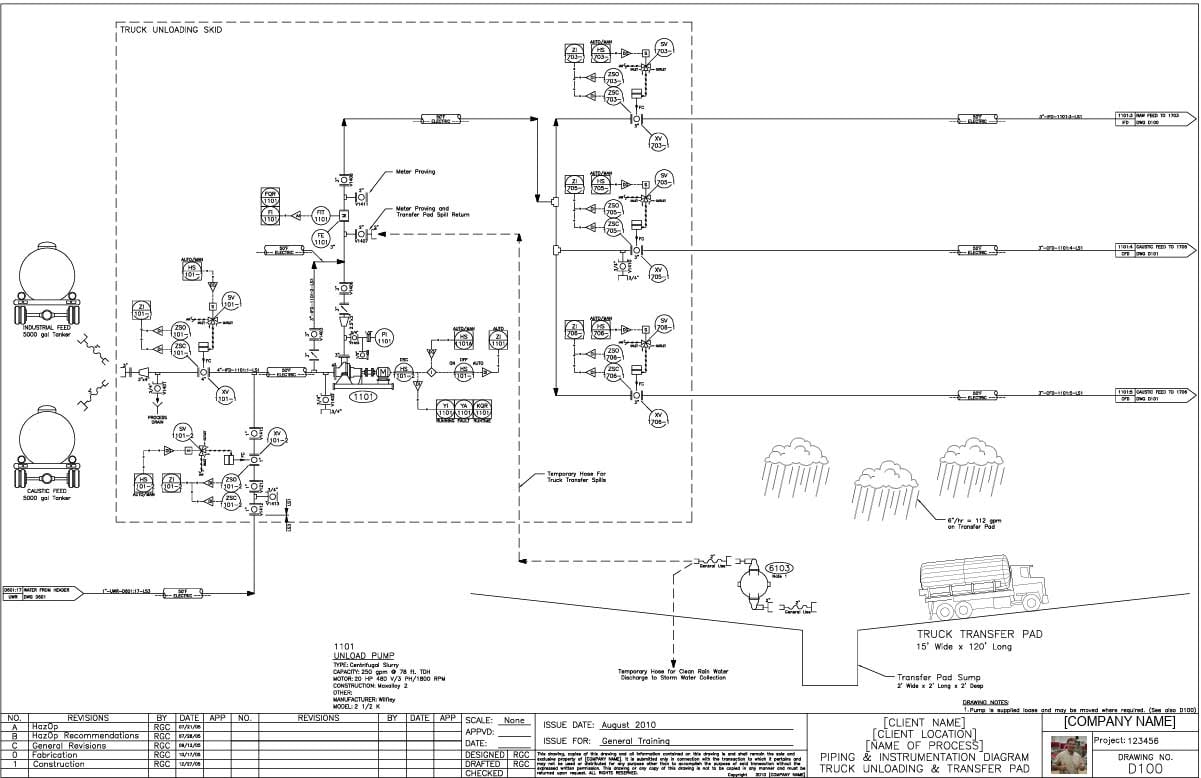
At first glance, a P&ID may look like a maze of lines, symbols, letters, numbers, valves, tanks, pumps, and instruments. But underneath all of that detail is something much more familiar: a roadmap.
A P&ID shows how a process system works. It helps explain where material enters a system, how it moves through tanks, pumps, piping, valves, instruments, and equipment, and where it goes next. In wastewater treatment, that might mean showing how water moves from a receiving tank to a treatment step, through a pump, into separation equipment, and eventually toward discharge, recycling, solidification, or another management option.
For engineers and operators, P&IDs are everyday tools. But they can also be useful for non-engineers. A plant manager, maintenance technician, environmental manager, sales professional, safety team member, or customer may not need to design a process system from scratch, but they may still need to understand how that system works.
That is where clear explanation matters.
Valicor CTO Bob Cook has written a five-part educational series for AIChE’s ChEnected site on how to interpret P&IDs. The series walks through the basics of these diagrams, including what they show, how symbols work, how equipment and instruments are labeled, and how readers can start making sense of a drawing that may seem complicated at first.
Part 1: Getting Comfortable With P&IDs
The first article introduces the idea that P&IDs can be learned, even if they look confusing at first.
Many technical drawings feel overwhelming because they use a visual language most people do not see every day. But like any language, it gets easier once you understand the common pieces.
For people in the waste industry, this is a good reminder that you do not always need to be the person designing the system to benefit from understanding the drawing. A salesperson may use a basic understanding of a process diagram to better follow a customer conversation. A facility manager may use it to understand what a vendor is proposing. A maintenance team may use it to plan around a pump, tank, or valve. A safety person may use it to understand where materials move through the system.
The more people understand the basics, the easier it is for teams to talk about the same process without talking past each other.
Part 1 - How to Interpret P&ID
Part 2: Understanding the Basics
The second part of Bob’s series focuses on what P&IDs are, what they show, and what they do not show.
That last part matters.
A P&ID is very useful, but it is not everything. It does not explain every operating decision. It does not tell you the full condition of the wastewater coming into a system. It does not replace lab data, operator knowledge, maintenance history, permits, standard operating procedures, or real-world experience.
In other words, the drawing is a tool. It gives structure to the conversation, but it is not the whole conversation.
This is very true in wastewater treatment. Two systems can look similar on paper but behave differently in the field. A wastewater stream may change by shift, by season, by production schedule, or by what is being cleaned, washed, rinsed, processed, or manufactured. Operators and technical teams still need to understand what is actually happening in the water.
The value of a P&ID is that it helps connect that real-world experience back to the system itself.
Part 3: Learning the Symbols
This is where P&IDs can start to look like a secret code. Different symbols can represent valves, pumps, instruments, control devices, line types, and other parts of a process. Once you know what those symbols mean, the diagram becomes much easier to follow.
A simple example is a valve. To a non-engineer, a valve may just sound like something that opens or closes. But in a treatment system, valves can control where material goes, whether a tank is isolated, whether a pump can be worked on safely, or whether flow can be redirected during maintenance or upset conditions.
The same idea applies to instruments. A small symbol on the drawing may represent something that measures tank level, flow rate, pressure, pH, or another important process condition. Those measurements help operators know what is happening inside the system, even when they cannot see inside a tank or pipe.
For industrial wastewater, those details matter. The difference between steady treatment and a problem can sometimes come down to flow, level, mixing, separation, chemical feed, or timing. Symbols are one way the diagram shows where those important pieces live.
Part 4: Codes, Tags, and Labels
This may not sound exciting, but it is one of the most practical parts of a P&ID.
In a facility, there may be many tanks, many pumps, many valves, and many instruments. Saying “the pump by the tank” is not always clear enough. Which pump? Which tank? Which valve? Which line?
Tags and labels help remove that confusion.
A pump might have a specific number. A tank might have a specific name. A line might have an identifier. An instrument might have a tag that tells the team what it measures and where it belongs in the process.
That kind of structure helps people work more safely and more efficiently. If a maintenance team needs to service a pump, they need to know exactly which pump they are working on. If an operator is troubleshooting a level issue, they need to know which tank and which instrument are involved. If an engineer is reviewing a process change, they need to know which lines and valves are part of the discussion.
In waste and wastewater operations, clear identification is not just a paperwork detail. It helps keep people aligned.
P&ID Part 4: Codes, Tags and Labels
Part 5: Using Visual Learning to Make It Easier
The fifth (and final) part of Bob’s series points readers toward video tutorials that help explain P&ID concepts visually.
That makes sense, because many people learn this subject better by seeing it. Reading about a symbol is one thing. Watching someone walk through a diagram and explain how the pieces connect is another.
This is especially helpful for people who are newer to process systems or who are not engineers by training. A good visual explanation can make the drawing feel less like a wall of technical information and more like a story about how the system works.
And that is really what a P&ID is doing. It is telling the story of a process.
In wastewater treatment, that story might begin with a truck unloading wastewater into a receiving area. From there, the material may move into a tank, through a pump, into a separation step, through chemical treatment, into additional processing, and then toward its final management point. Along the way, instruments and controls help the team monitor what is happening.
The P&ID helps show that story in a structured way.
P&ID Part 5: Video Tutorial Series
How P&IDs Help Teams Make Better Decisions
One reason P&IDs are so useful is that they help different teams look at the same system from different angles.
-
An operator may look at a P&ID and think about how material moves through the process during a normal shift.
-
A maintenance technician may look at the same drawing and think about how to isolate a pump or valve before beginning work.
-
An engineer may look at it and think about whether the system has the right equipment, controls, and flow paths.
-
A safety or compliance person may look at it and think about where risks, monitoring points, or control points exist.
-
A customer or business leader may look at it and simply want to understand what the treatment system is doing and why.
That shared view is valuable. It helps turn a complicated system into something people can discuss together.
In the waste industry, this can be especially useful because the work often involves a mix of technical, operational, environmental, and business concerns. A treatment approach has to work in the real world. It has to match the waste stream. It has to be manageable for the facility. It has to support compliance goals. It has to be practical for the people operating the system every day.
A P&ID does not solve all of that by itself, but it helps organize the conversation.
Why This Fits Valicor’s Work
At Valicor, we work with industrial facilities that generate wastewater and other non-hazardous waste streams as part of their operations. Those streams can come from manufacturing, food and beverage production, environmental services, industrial cleaning, transportation, utilities, and many other types of facilities.
In many cases, the challenge is not just “What do we do with this water?”
It is also:
What is in it?
How consistent is it?
How much volume is there?
What treatment steps make sense?
What needs to happen before it can be discharged, reused, solidified, recycled, treated further, or otherwise managed?
What operational issues could come up?
How do we build a process that is reliable enough for the real world?
Those are practical questions. They are also technical questions.
That is why clear communication matters so much. The best solution is not always the one that sounds the most complex. Often, the best solution is the one that the technical team, operating team, customer, and facility team can all understand well enough to use correctly.
Bob Cook’s P&ID series is a good example of that kind of communication. It takes something technical and helps make it easier to approach.
Technical Knowledge Is Most Useful When People Can Understand It
One of the things that stands out about Bob’s AIChE series is the way it treats technical knowledge as something that should be shared, not hidden behind jargon.
That is an important mindset in industrial wastewater treatment.
The work is technical. There is no way around that. Pumps, tanks, flow rates, chemistry, instrumentation, treatment systems, solids, oil separation, organics, pH, discharge limits, and operating conditions all matter. But the people involved in solving a wastewater challenge may not all have the same technical background.
That is where plain-language explanation helps.
When technical teams can explain how a system works, customers can make better decisions. Operators can understand the “why” behind the process. Sales and service teams can communicate more clearly. Maintenance teams can plan work with better context. Managers can better understand what is needed to keep a process running reliably.
That kind of understanding does not make the work less technical. It makes the technical work more useful.
Read Bob Cook’s Original AIChE Series
Bob Cook’s full five-part series is available through AIChE’s ChEnected site.
For anyone who wants to better understand how process systems are documented and discussed, the series is a helpful place to start.
You do not have to be an engineer to appreciate the basics. If you work around industrial waste, wastewater treatment, plant operations, maintenance, safety, or environmental compliance, a better understanding of P&IDs can make technical conversations easier to follow.
And sometimes, that is the first step toward solving a problem.
Have a Wastewater Challenge That Needs a Closer Look?
Industrial wastewater treatment works best when the process is understood clearly. Valicor helps facilities evaluate wastewater streams, identify practical treatment options, and manage non-hazardous waste streams through a network of treatment and service capabilities.
If your facility is dealing with a complex wastewater stream or trying to better understand its treatment options, Valicor’s team can help you take the next step.