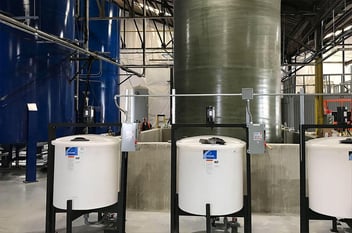
Combining wastewater streams can seem like the simplest way to manage them. In some cases, though, mixing a relatively clean stream with a more difficult one can increase treatment costs, reduce reuse options, and turn a small problem into a much larger volume of wastewater.
At many industrial facilities, wastewater from different parts of the operation eventually ends up in the same tank, pit, trench, or collection system. From an operations standpoint, that can seem efficient. One stream is generated here, another there, and eventually all of it needs to be managed anyway.
The problem is that wastewater streams can be very different from one another, even when they come from the same facility. A relatively small amount of oily, high-strength, salty, acidic, or otherwise difficult wastewater can change the treatment options available for a much larger volume of water. Once those streams are combined, the characteristics of the more difficult material can affect the entire load.
That means one of the most important wastewater treatment decisions may happen before treatment begins: deciding what should, and should not, be mixed together.
A Simple Example
Imagine a facility generates two wastewater streams during a maintenance project. One is 8,000 gallons of relatively clean rinse water. The other is 1,000 gallons containing a much higher concentration of oil, solids, chemicals, or other contaminants.
If those streams remain separate, the 8,000 gallons may have several relatively straightforward treatment or reuse options, while the smaller 1,000-gallon stream may require more specialized treatment. If they are mixed together, however, the facility now has 9,000 gallons of wastewater containing the characteristics of the more difficult material.
The contamination did not disappear. It was simply diluted across a larger volume. Depending on the material involved and the receiving facility, that may not make the wastewater any easier to manage. In some cases, it simply creates more gallons that have to follow the more expensive treatment pathway.
Why Mixing Can Change the Cost
Wastewater treatment is rarely priced based only on gallons. The characteristics of the wastewater matter just as much, and sometimes more.
Treatment facilities may need to consider oil and grease, total suspended solids, chemical oxygen demand, biological oxygen demand, pH, metals, salts, glycols, surfactants, nutrients, odor, flash point, organic loading, and other chemicals associated with the process.
A large volume of relatively simple wastewater may be easier to manage than a much smaller volume containing high concentrations of a difficult contaminant. Once those streams are combined, the entire load may need to be evaluated according to the more restrictive characteristics. That can affect where the wastewater can go, how it must be transported, what treatment is required, and ultimately how much it costs to manage.
Dilution Is Not the Same as Treatment
It is easy to assume that adding cleaner water to a difficult wastewater stream makes the problem smaller. From a concentration standpoint, that may be true, but from a wastewater-management standpoint, it may not help very much.
If 500 gallons of concentrated wastewater are mixed with 5,000 gallons of relatively clean water, the contaminants are now spread through 5,500 gallons. The total mass of the contaminant has not changed, and depending on the receiving facility and the nature of the material, the wastewater may still require the same basic treatment process. Now there is simply more of it.
There are situations where blending streams is useful as part of a properly designed treatment strategy. Wastewater treatment facilities routinely equalize or blend incoming materials to maintain consistent treatment conditions. The key difference is that intentional blending is done for a reason and with an understanding of the chemistry. Unplanned mixing can simply turn a smaller treatment problem into a larger one.
Some Streams May Have More Value on Their Own
Keeping wastewater separate is not only about treatment cost. It can also preserve reuse or recovery opportunities.
Cooling water, final rinse water, glycol-containing water, oily wastewater, or certain process streams may have value when they are kept separate. Depending on the material, they may be candidates for on-site reuse, additional treatment and reuse, oil recovery, glycol recovery, fuel blending, water recycling, or use in another industrial process.
Once a relatively clean or recoverable stream is mixed with another material, some of those options may disappear. A stream that could have been treated or reused independently may become ordinary wastewater simply because it was sent to the same tank as everything else.
This is one reason source segregation is becoming more important as industries look more closely at water reuse and resource recovery. If everything is mixed together at the beginning, it becomes much harder to recover anything selectively at the end.
Data Centers Provide a Good Example
Data center construction and operation can generate several very different types of water. During construction and commissioning, contractors may produce water from initial system flushing, secondary flushing, hydrotesting, equipment cleaning, cooling-loop preparation, and glycol solution changes. Later, the operating facility may generate cooling-tower blowdown, maintenance water, and other wastewater streams.
Those materials should not automatically be assumed to have the same characteristics. An early flush may contain construction debris, oils, mill scale, pipe treatment chemicals, or elevated solids, while a later rinse may be much cleaner. A glycol-containing stream may require an entirely different management approach.
If all of those streams are sent to the same tank, the facility may lose opportunities to manage some of them more efficiently. In these situations, knowing when the wastewater was generated and what part of the system it came from can be just as important as knowing the total volume.
The Same Principle Applies to Manufacturing
Manufacturing facilities often generate wastewater from several stages of the same process. A parts washer, for example, may include multiple rinse stages. Water from the final rinse may contain much lower contaminant concentrations than water from the first wash stage.
If the entire system drains into one sump, all of that water becomes one wastewater stream. In some cases, separating cleaner rinse water may allow it to be reused earlier in the process or managed through a different treatment pathway.
Similar situations can occur in automotive manufacturing, metal finishing, food and beverage production, chemical manufacturing, paint and coating operations, equipment washing, tank cleaning, electronics manufacturing, and industrial laundries.
The exact opportunity varies by facility, but the underlying principle is the same: wastewater streams that appear similar because they come from the same building may be very different chemically.
Maintenance Projects Can Create Unexpected Mixing
Shutdowns, cleanouts, and maintenance projects are especially likely to create wastewater streams that get combined unintentionally.
During normal production, facilities usually have well-defined drains, tanks, and process controls. Maintenance work often introduces temporary hoses, vacuum trucks, portable tanks, washdown equipment, pumps, and other temporary arrangements. Water from several unrelated activities can suddenly end up in the same container.
A single tank might receive tank wash water, hydrotest water, cooling-system flush water, floor washdown, rainwater from containment, residual process material, and equipment-cleaning water. Once those materials are combined, determining exactly what is in the tank becomes more difficult, and the resulting wastewater may require additional sampling, profiling, or treatment before an outlet can be identified.
Planning temporary wastewater segregation before a maintenance project begins can help prevent that situation and may preserve simpler management options for some of the streams involved.
Stormwater Can Get Pulled Into the Same Problem
Stormwater is another common source of unnecessary wastewater volume. Secondary containment areas, outdoor tanks, loading areas, and process pads can collect significant amounts of rainwater.
If that rainwater has not contacted industrial materials, a facility may have options for managing it under its stormwater program. Once it becomes mixed with process wastewater, oil, chemicals, or contaminated residuals, those options may change.
A heavy rain event can quickly turn a relatively small wastewater problem into thousands of additional gallons. This is especially important in open containment areas. If a containment area already contains a small amount of spilled material or process residue, rainfall may dramatically increase the amount of water that has to be removed and evaluated.
The contaminant may not have changed, but the volume certainly has.
Segregation Does Not Mean Building an Entire New Treatment System
The idea of separating wastewater streams can sound more complicated than it needs to be. Facilities do not necessarily need a completely separate treatment system for every process.
Sometimes segregation is as simple as using a separate portable tank, labeling temporary storage containers, directing one drain to a different tote, scheduling different waste streams at different times, keeping first-flush and final-rinse water separate, isolating rainwater before it contacts process material, or sampling a stream before combining loads.
The goal is not to create unnecessary complexity. It is to identify the handful of streams where separation could materially affect treatment options, cost, or reuse potential.
Start With the Expensive Stream
One practical way to look for opportunities is to start with the wastewater that is most difficult or expensive to manage and ask what makes it difficult.
Is it oil? High solids? High chemical oxygen demand? Extreme pH? Salts? Glycol? Metals? A particular chemical?
Once that characteristic is identified, the next question is whether other water is being added to the stream unnecessarily. If a large portion of the final volume comes from rinsing, washdown, rainfall, or another relatively clean source, there may be an opportunity to reduce the amount that requires specialized treatment.
This approach will not work in every situation. Sometimes all of the water truly does need the same treatment. But understanding what drives the treatment requirement can reveal opportunities that are easy to miss when everything is viewed as a single wastewater stream.
Sampling Can Help Identify Opportunities
Facilities sometimes know the total volume of wastewater they generate but have very little information about the individual streams that make up that volume.
Sampling those streams separately can reveal significant differences. One rinse may have very low contaminant levels, while another contains most of the organic loading. The first portion of a maintenance flush may carry high solids for only a short period, while later water is considerably cleaner.
Understanding those differences can help facilities determine whether segregation is worth considering. It can also produce better wastewater profiles.
A single sample taken from a large mixed tank can describe what the facility ultimately ships, but it does not necessarily explain how that wastewater was created. Understanding the individual sources gives the facility more options before everything is combined.
There Is Also an Operational Benefit
Wastewater segregation can improve more than treatment economics. It can also make unexpected problems easier to diagnose.
If everything flows into the same collection system and a wastewater parameter suddenly changes, finding the cause can be difficult. The change could be related to a new cleaner, a leaking heat exchanger, a production change, a tank wash, a maintenance activity, or a different raw material.
When streams are better understood and managed separately, facilities may be able to identify those changes more quickly. That can help protect on-site treatment systems and reduce the chance that an unusual discharge affects a municipal wastewater plant or outside treatment provider.
When Mixing Does Make Sense
Separating wastewater is not always the right answer. There are many situations where blending streams is completely appropriate.
A treatment system may perform better with a consistent feed. Acidic and alkaline streams may be intentionally combined as part of pH adjustment. A concentrated wastewater may be blended with compatible material so that a treatment system can operate more effectively. Treatment facilities may also equalize incoming loads to prevent sudden changes in chemistry.
The important distinction is whether the mixing is intentional and understood. If a facility knows why streams are being combined, understands the chemistry, and has confirmed that the resulting wastewater can be treated efficiently, mixing can be part of a sound wastewater strategy.
Problems are more likely when everything is combined simply because that is the easiest place to send it.
A Useful Question Before Opening the Valve
Before sending one wastewater stream into another, it can be worth asking a simple question: Are we making this easier to treat, or are we just making more of it?
That question applies to tank cleanouts, production rinses, data center flushes, stormwater containment areas, and entire manufacturing processes.
Sometimes the answer will be that mixing makes little difference. In other situations, keeping two streams separate can preserve treatment options, reduce volume, support reuse, or prevent thousands of gallons of relatively clean water from becoming part of a more expensive waste stream.
Wastewater Management Starts at the Source
Wastewater treatment often receives most of the attention after the material has already been generated. By that point, though, many of the most important decisions have already been made.
The chemicals used in the process, where drains are located, how equipment is cleaned, where rainfall collects, which tanks receive which streams, and whether different waters are mixed together can all influence the final treatment options.
A facility does not necessarily need to generate less wastewater to improve how it manages wastewater. Sometimes the better opportunity is to understand the individual streams more clearly and avoid combining them before there is a reason to do so.
At Valicor, we work with industrial facilities to characterize and manage wastewater from manufacturing, maintenance, data center construction, stormwater collection, and other operations. Looking at individual waste streams before they are combined can help identify treatment, recovery, reuse, and transportation options that may be harder to see once everything is in the same tank.