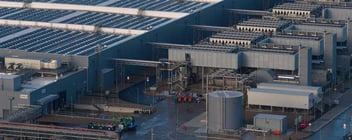
EPA’s renewed national water reuse strategy gives data centers and semiconductor manufacturing a prominent role. The plan could help accelerate new reuse projects, but its broader impact may extend across food and beverage, automotive, energy, and other water-intensive industries.
For years, water reuse has often been discussed as a sustainability goal.
Use less freshwater. Recycle more process water. Reduce the amount of treated wastewater discharged from a facility.
Those remain important benefits, but the conversation is beginning to change.
As data centers, semiconductor plants, manufacturing facilities, and energy projects expand across the United States, water reuse is increasingly being treated as a practical infrastructure issue. Companies need dependable water supplies to operate, while communities need to protect the water available to residents, businesses, agriculture, and the surrounding environment.
In April 2026, the U.S. Environmental Protection Agency released its Water Reuse Action Plan 2.0, commonly called WRAP 2.0.
The plan puts a new emphasis on water reuse for American industry, technology infrastructure, and energy production. Data centers and semiconductor manufacturing receive particular attention because of the growing water demands associated with artificial intelligence and other advanced computing.
For data center developers, this could make recycled water a more important part of site selection and infrastructure planning.
For more established industries, it may signal that water reuse is moving closer to the center of national industrial policy.
What Is the Water Reuse Action Plan 2.0?
WRAP 2.0 builds on the original National Water Reuse Action Plan released in 2020.
The original plan created a national framework for bringing together federal agencies, states, utilities, businesses, researchers, and other organizations interested in expanding water reuse.
EPA says the effort has grown to include approximately 200 partners working on 76 actions, with more than 200 resources developed for the water reuse industry.
The new version organizes its priorities around three major areas:
- Supporting domestic industry
- Providing water for the U.S. technology sector
- Supporting energy development and electricity generation
It is important to understand that WRAP 2.0 is not a new federal regulatory mandate.
The plan does not require every facility to begin recycling water. It does not create one nationwide water reuse standard, and it does not automatically change existing wastewater discharge permits.
Instead, it is a collaborative roadmap.
EPA and its partners plan to develop technical resources, share successful projects, support states as they create permitting approaches, identify possible water supplies, improve access to funding, and reduce some of the uncertainty that can slow reuse projects.
That distinction matters. WRAP 2.0 does not force reuse, but it may make reuse easier to evaluate and implement.
Why Are Data Centers Such a Major Focus?
Data centers require water for several reasons, but cooling is the most visible.
Servers produce heat, and data center operators must continuously remove that heat to keep equipment operating. The amount of water involved varies widely depending on the facility’s design, location, climate, cooling system, operating conditions, and workload.
Some facilities use relatively little water on site. Others rely heavily on evaporative cooling, particularly during hot weather.
The challenge is not simply that data centers use water.
It is that large new facilities may be proposed in places where water and wastewater infrastructure was not designed to support that level of industrial demand.
A community may have enough water on an annual basis but still lack the treatment, storage, piping, pumping, or peak capacity needed to serve a major campus. Wastewater systems may face similar constraints.
WRAP 2.0 directly identifies reliable water supplies for data centers and semiconductor facilities as a national priority. EPA describes recycled water as a way to support continued technology growth without placing the entire demand on freshwater and groundwater sources.
That is a meaningful shift.
Water is no longer being treated as a secondary utility question to answer after a data center site is selected. In many communities, it may become one of the factors that determines whether a project is practical in the first place.
What Does Water Reuse Look Like at a Data Center?
Water reuse can take several forms.
A data center might receive treated municipal wastewater through a dedicated reclaimed-water system. It could capture and treat cooling water for reuse on site. It might also use water from another nearby industrial or municipal source if the water can be treated to meet the cooling system’s needs.
The right solution depends on the source water, the cooling technology, local infrastructure, and the quality required by the equipment.
EPA’s Quincy, Washington, water reuse case study provides one example.
Microsoft and the City of Quincy developed a system that treats cooling water from a Microsoft data center and circulates it back for additional cooling use. EPA reports that the system offsets approximately 138 million gallons of water demand per year.
The project reduces reliance on local potable groundwater while also providing water that is more suitable for the cooling equipment than the area’s naturally mineral-rich groundwater.
That last point is easy to overlook.
Recycled water is not always a lower-quality substitute for freshwater. With the right treatment, it may be better suited to a particular industrial use.
However, the Quincy system also illustrates one of the realities of reuse. Minerals and salts removed from the cooling water do not simply disappear. They become a concentrated residual that still needs to be managed.
Water reuse can reduce freshwater demand and wastewater discharge, but it does not eliminate every waste stream connected with the process.
EPA Wants to Make Recycled Water Easier to Use for Data Center Cooling
One of the new WRAP 2.0 actions focuses specifically on helping states expand the use of recycled water for industrial and data center cooling.
EPA plans to work with states and regulated organizations to gather and share best practices that may help states permit these systems more efficiently.
This could address one of the biggest barriers to water reuse: inconsistency.
Water quality requirements, permitting pathways, terminology, monitoring expectations, and acceptable uses can vary from one state to another. A project model that works in Virginia or Washington may not move through the same process in Georgia, Texas, Ohio, or another state.
Greater consistency will not eliminate local decision-making, nor should it. Water resources and public infrastructure differ significantly by region.
However, common technical resources and proven examples could help utilities, developers, and regulators avoid rebuilding the entire process from the beginning for every project.
The plan also includes an effort to map utilities with recycled water that may be available for industrial use.
That type of tool could eventually become useful during data center site selection. Developers could compare prospective sites not only by electricity, land, fiber connectivity, and tax incentives, but also by access to a dependable alternative water supply.
Reuse Does Not Always Mean Drinking Water
The term “recycled water” can create confusion because many people immediately imagine wastewater being treated and returned to household taps.
Potable reuse is one form of water reuse, but it is not the only one.
Industrial facilities often need water that is appropriate for a particular process, not necessarily water treated to drinking-water standards.
Recycled water may be used for:
- Cooling towers
- Boiler feed
- Equipment washing
- Rinsing
- Dust control
- Landscaping
- Certain manufacturing processes
- Utility water
- Other non-potable applications
EPA notes that industrial reuse can sometimes be less costly and less energy intensive because the water has limited direct human contact. Treatment can be designed around the quality needed for the intended use rather than applying the same treatment standard to every application.
EPA’s industrial water reuse resources include both municipal reclaimed water and water generated within an industrial facility, such as cooling water, boiler water, semiconductor process water, and water from oil and gas operations.
This is an important point for facilities beginning to investigate reuse.
The goal is not necessarily to treat every gallon to the highest possible standard. It is to match an available water source with an appropriate use and provide the treatment necessary to connect the two safely and reliably.
What Could WRAP 2.0 Mean for Data Center Development?
WRAP 2.0 could influence data center projects in several ways.
Water May Become a Larger Part of Site Selection
Developers already evaluate power availability, fiber access, land, permitting, labor, and community support.
Access to recycled water may become another major advantage.
A community that can provide a dependable reclaimed-water supply could support data center growth without placing the same level of demand on drinking-water infrastructure.
This does not mean every site with reclaimed water is suitable. The supply must be close enough, dependable enough, and of a quality that can be treated economically.
Still, cities and utilities may begin viewing recycled water infrastructure as an economic-development asset.
Water Planning May Need to Begin Earlier
Water and wastewater decisions cannot be left until the final stages of construction.
The cooling design affects the water demand. The water source affects the treatment system. The treatment system affects the residuals. The residuals affect the wastewater and waste-management plan.
These pieces are connected.
Data center developers may need to involve utilities, water-treatment specialists, wastewater providers, flushing contractors, environmental teams, and local regulators much earlier in the process.
Municipal and Industrial Partnerships May Grow
Many reuse projects require cooperation between a private facility and a public utility.
The utility may provide reclaimed water, while the industrial user supplies a stable long-term demand. That demand can help justify infrastructure investments that might otherwise be difficult for a community to fund.
In other cases, multiple industrial facilities could share infrastructure or use water produced by another nearby operation.
WRAP 2.0 is designed to encourage these types of partnerships and provide more examples of how they can be structured.
Reuse Could Become Part of Community Acceptance
Data center water use has become a significant public concern in many markets.
A reuse strategy does not eliminate every concern. Cooling systems may still lose water through evaporation, and any infrastructure project can create costs or tradeoffs.
However, using treated wastewater instead of drinking water can give communities a clearer picture of how a project plans to reduce its impact on local freshwater supplies.
The most credible reuse plans will be specific.
They should explain where the water comes from, how much is available, what treatment is required, how much water is consumed, what is returned, what residuals remain, and how the system performs during drought or peak demand.
What Does This Mean for More Established Industries?
Although data centers receive much of the attention, WRAP 2.0 is much broader.
The plan identifies applications in food and beverage production, automotive manufacturing, component fabrication, agriculture, power generation, semiconductor production, and energy development.
Many of these industries have been managing water for decades.
They may already operate cooling towers, boilers, rinse systems, wastewater treatment equipment, storage tanks, and discharge systems. Some already reuse water internally, even if they do not describe the practice as part of a formal water reuse program.
WRAP 2.0 could give these industries new reasons to revisit opportunities that were previously dismissed as too difficult or too expensive.
Food and Beverage
Water quality is especially important in food and beverage operations because some uses may involve direct or indirect contact with products.
WRAP 2.0 includes actions intended to establish a decision-making framework for reuse in food and beverage production and to streamline permitting for appropriate applications.
This does not mean untreated process water can simply be used again.
It means industry and regulators may develop clearer guidance for identifying where reuse is safe, what treatment is needed, and how facilities should monitor the water.
Uses with less product contact, such as cooling, cleaning certain exterior areas, or utility applications, may offer the most straightforward starting points.
Automotive and General Manufacturing
Automotive plants and other manufacturers use water for washing, surface preparation, cooling, rinsing, paint systems, equipment cleaning, and utilities.
Some wastewater streams may be suitable for treatment and reuse within the same process. Others may be usable in a different application that requires lower water quality.
A relatively clean final rinse, for example, might be reused earlier in a multistage washing process. Cooling water may be recirculated. Treated municipal water may replace potable water in a cooling tower.
The opportunity is often not one large project. It may be a series of smaller process changes that reduce freshwater demand and wastewater volume over time.
Power Generation
Power plants can require substantial volumes of water for cooling, boiler systems, emissions controls, and other operations.
WRAP 2.0 includes plans for a mapping tool that could help identify alternative water sources located near power-generation facilities.
This could include treated municipal wastewater or water from other industrial operations.
Geography matters enormously. Moving large volumes of water over long distances is expensive, so nearby sources are generally more practical.
A mapping tool could make it easier to identify where supply and demand are close enough to justify a deeper feasibility study.
Oil and Gas
EPA also plans to explore additional opportunities for treating and reusing produced water from oil and gas operations.
Potential uses mentioned in WRAP 2.0 include industrial cooling, critical-mineral extraction, rangeland restoration, agriculture, dust suppression, and even data center applications.
These proposals will require careful evaluation.
Produced water quality varies widely, and treatment requirements can be significant. Salts, hydrocarbons, metals, naturally occurring radioactive materials, and other constituents may limit potential uses.
The existence of a large wastewater supply does not automatically make it a practical reuse source.
Still, the plan shows that EPA is encouraging industries to look at wastewater as a potential resource where treatment, location, economics, and regulations align.
Water Reuse Is Not Automatically the Best Answer
The growing attention around reuse should not lead facilities to assume that every wastewater stream should be recycled.
Some streams may require more treatment than the recovered water is worth. A facility may lack a consistent reuse demand. The wastewater may be generated too far from a suitable user. Storage needs may be impractical, or the treatment process may create a difficult residual.
There are also situations where reducing water use at the source is more effective than building a large treatment system.
A sound reuse project begins with a few basic questions:
- How much water is available?
- How consistent is the supply?
- What contaminants are present?
- What water quality does the proposed user need?
- How far apart are the source and the user?
- What treatment is required?
- What residuals will treatment create?
- Who will own and operate the system?
- What happens when either the supply or demand changes?
- Does the project remain practical during drought, maintenance, or peak production?
Water reuse works best when it solves a real operational problem rather than being added simply to support a sustainability claim.
The Wastewater Still Has to Be Managed
Reuse can change the way a wastewater stream is managed, but it does not necessarily eliminate wastewater.
Cooling towers lose relatively pure water through evaporation, leaving salts and other dissolved material behind. To control that buildup, facilities remove a portion of the circulating water as blowdown.
Treatment systems may also produce sludge, concentrate, spent filters, brine, or other residuals.
Some water may be reusable several times before it reaches a point where further treatment is no longer practical.
That final stream still needs an approved outlet.
This is where wastewater management becomes part of the reuse discussion.
Facilities need to understand not only how to recover useful water, but also how to store, transport, treat, or dispose of the remaining material. A project that reduces water purchases but creates a difficult residual may simply move the challenge from one part of the operation to another.
Where Could Valicor Fit Into This Shift?
Large municipal reuse systems and dedicated pipelines will be important, but they will not solve every industrial water challenge.
Some facilities will generate water that is potentially useful but inconsistent in volume or quality. Others may need temporary options during construction, commissioning, maintenance, treatment-system outages, or infrastructure expansion.
New data centers may also generate substantial volumes of water during system flushing before permanent operations begin. That water can differ from the wastewater generated later during normal cooling operations.
A broader treatment and transportation network can help connect the gaps between water generation, treatment, reuse, and final management.
Depending on the material and the project, that may involve:
- Characterizing wastewater before selecting an outlet
- Separating streams with different reuse potential
- Transporting water to an appropriate treatment facility
- Providing temporary storage or hauling during system startup
- Managing cooling-tower blowdown or treatment residuals
- Supporting facilities when municipal capacity is limited
- Identifying alternatives when direct reuse is not practical
- Helping industrial sites maintain operations while permanent reuse infrastructure is developed
Not every wastewater stream will become a reusable product.
However, understanding the available treatment and logistics options can help prevent usable water from being discarded simply because the source and the potential user are not directly connected.
Water Is Becoming Part of Industrial Strategy
EPA’s Water Reuse Action Plan 2.0 does not require data centers or manufacturers to begin using recycled water.
What it does is elevate water reuse as a national economic and infrastructure priority.
For data centers, the message is especially clear. The ability to secure a dependable water supply without placing additional pressure on local freshwater resources may become increasingly important to where and how new facilities are built.
For established industries, the plan creates an opportunity to revisit wastewater streams, treatment systems, and reuse projects that may have been overlooked in the past.
Water reuse will not look the same everywhere.
In some locations, it may involve a major municipal pipeline serving several industrial customers. In others, it may mean recovering a single rinse stream, recycling cooling water, or finding a nearby use for treated wastewater.
The common idea is simple: water that has already been collected and treated may still have value.
As industrial demand grows and communities place greater attention on local water supplies, the ability to recognize and use that value could become an increasingly important part of facility planning.
At Valicor, we help industrial facilities evaluate and manage complex wastewater streams through a network of treatment facilities and transportation resources. Whether water is being prepared for reuse, removed during a data center system flush, or managed after additional recovery is no longer practical, having a flexible plan can help facilities protect operations while adapting to changing water demands.