Challenges Facilities Are Facing During This Winter Freeze
This January has not been a typical return to routine for many industrial facilities. Widespread winter storms and extended hard freeze conditions have complicated what is already a delicate transition period following holiday shutdowns and reduced staffing. Across much of the country, facilities are restarting operations while managing frozen equipment, delayed transportation, and wastewater systems that have been stressed by cold temperatures.
We are seeing this play out in real time. Wastewater issues surfacing right now are not theoretical or seasonal in the abstract. They are tied directly to prolonged cold, frozen infrastructure, and the practical realities of bringing systems back online during severe winter conditions.
Wastewater Continues to Accumulate During Cold Weather Shutdowns
Even during shutdowns, wastewater does not stop accumulating. Tanks remain partially filled, sumps collect residual liquids, and stormwater or snowmelt can enter secondary containment areas. During this freeze, those materials may have thickened, partially frozen, or stratified while sitting idle.
As facilities restart, these stored liquids often combine with new wastewater generated from cleaning, flushing, and system testing. The result is frequently higher volume in a compressed timeframe, along with wastewater that behaves differently than expected once temperatures begin to fluctuate.
Restart Activities Are Generating More Complex Wastewater Right Now
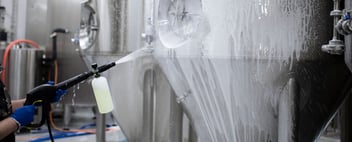
The restart process during this cold spell has introduced added complexity. Facilities are flushing lines to address freeze concerns, draining equipment that could not be fully winterized, and running cleaning systems harder than usual to ensure safe operation.
Common restart activities we are seeing include:
-
Aggressive line and tank flushing following freeze conditions
-
CIP system use to address stagnation and residue buildup
-
Draining of equipment impacted by cold weather
-
Boiler and cooling system maintenance related to freeze protection
Wastewater generated under these conditions often contains higher solids, elevated oil content, or residues that settled during downtime. In cold temperatures, separation behaves differently, and material that appeared stable before shutdown may no longer be uniform once disturbed.
Cold-Weather Additives Are Showing Up More Frequently in Wastewater Streams
This winter has driven heavier use of cold-weather additives across many facilities. Glycols, antifreeze solutions, corrosion inhibitors, and winterized cleaning products are being used not just as a precaution, but as a necessity.
During this freeze, we are seeing these additives show up in wastewater more often and in higher concentrations than in a typical January. Even when used responsibly, these materials can change wastewater characteristics in ways that matter downstream.
Observed impacts include changes in:
-
Chemical oxygen demand
-
Oil and grease behavior
-
Odor and appearance
-
Treatability and acceptance at processing facilities
Facilities that do not normally account for these additives may find that wastewater profiles need to be revisited to reflect what is actually being generated during extreme cold.
EPA overview of industrial wastewater considerations:
https://www.epa.gov/industrialwastewater
This Freeze Is Exposing Constraints That Are Easy to Miss in Milder Winters
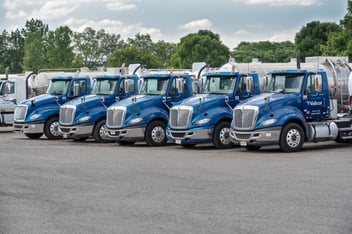
The current weather has tightened margins across the board. Transportation delays due to road conditions, reduced carrier availability, and safety restrictions are affecting how quickly wastewater can be moved. At the same time, internal staffing remains limited at many sites as teams work through weather-related absences and delayed restarts.
These conditions are revealing constraints that might otherwise stay hidden. Storage that was adequate in the fall feels tighter. Wastewater that was easy to manage in warmer weather now requires more attention. None of this is unusual during a hard freeze, but it does require coordination and patience.
Continuity Is Especially Important During Extreme Winter Conditions
One of the biggest challenges during a winter like this is the temptation to treat restart wastewater as a one-off issue. In reality, permits, profiles, and compliance obligations continue uninterrupted, even as conditions make day-to-day operations more difficult.
At Valicor, much of our work during this freeze has focused on continuity. That means helping facilities understand how wastewater generated during shutdowns, freeze response, and restarts fits within their existing regulatory framework. It is about maintaining alignment, not improvising under pressure.
EPA NPDES program overview:
https://www.epa.gov/npdes
A Measured Restart Matters More During a Hard Freeze
This January is a reminder that wastewater systems are deeply connected to weather, infrastructure, and timing. Facilities restarting during this freeze are balancing safety, compliance, and operational urgency, often all at once.
Wastewater challenges right now are less about the calendar and more about conditions on the ground. Facilities that approach restart deliberately, with attention to what accumulated during shutdown and how cold-weather changes affect wastewater, are better positioned to stabilize operations as temperatures normalize.
Winter storms pass, but the wastewater generated during them still needs to be managed carefully. A steady, informed approach during this restart period helps ensure that when operations fully resume, they do so without unnecessary complications.