Environmental compliance continues to evolve — especially around industrial wastewater management and water quality protections. As regulators at both the federal and state level increase oversight, companies operating across the Midwest, Central, and Southern U.S. would benefit from understanding the priorities and trends likely to shape 2026.
1. Increasing Inspection & Enforcement Activity
Federal and state enforcement data shows that regulators are actively tracking compliance with water discharge permits and state environmental requirements. The EPA’s public dashboards allow users to visualize enforcement actions, violations, inspections, and penalties reported by states and by EPA regions, a useful measure of how compliance focus is evolving across the country. EPA ECHO
2. Progress on NPDES Permit Compliance
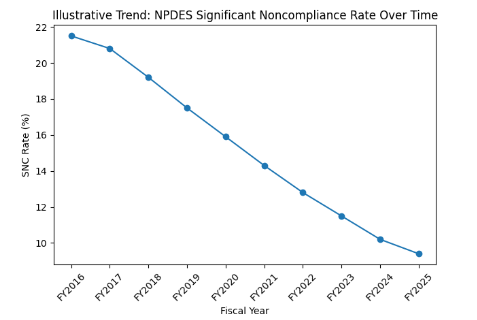
Under the Clean Water Act’s National Pollutant Discharge Elimination System (NPDES), EPA and authorized states have focused on reducing facilities in Significant Noncompliance (SNC). The most recent national initiative demonstrates that EPA and states have driven the SNC rate down from over 20% to under 10%, a sign of increased compliance pressure and better oversight. US EPA
3. Data Transparency & Digital Reporting
Regulators are enhancing reporting tools and dashboards that improve data accessibility and transparency. New capabilities in EPA’s ECHO platform and the Water Quality Indicators tool allow companies to visualize water quality records, pollutant levels, and compliance histories across regions and watersheds. EPA ECHO
This trend underscores the need for clean, accurate digital reporting workflows not just compliance in the books, but compliance visible to regulators and stakeholders.
4. Regulatory Focus Beyond Traditional Compliance
The EPA’s enforcement program now includes alerts and technical resources that extend beyond traditional discharge limits. For example, cybersecurity vulnerabilities at public water systems have been highlighted as a concern for drinking water compliance, a reminder that compliance isn’t limited to wastewater composition, but also system reliability. US EPA
5. What This Means for Companies in Valicor’s Markets
While national regulation may not change overnight, state agencies are strengthening enforcement, expanding inspection capacity, and leveraging data tools to monitor compliance more closely. States throughout the Midwest, South, and Central regions have shown similar focus, often aligning with federal priorities even in the absence of new nationwide mandates.
The takeaway:
- Compliance readiness matters early in the year
- Data accuracy and workflow robustness reduce regulatory risk
- Understanding local enforcement trends helps prioritize gap closing
And because many compliance tools and dashboards are publicly available, companies can proactively benchmark their performance against state and regional trends.
Practical Steps for 2026
✔ Perform an early-year compliance audit
✔ Review wastewater permit records for completeness
✔ Evaluate digital reporting processes for accuracy
✔ Monitor state-specific dashboards for enforcement trends
✔ Align internal teams with regulatory focus areas